
Walking Tours &
Nearby Attractions

Three self-guided routes, dozens of landmarks, and the hidden corners of the 7th Arrondissement. The best of Paris on foot, radiating from the Iron Lady.

The Classic Route
Trocadéro to École Militaire

The essential Eiffel Tower walking tour. 3.2 km, approximately 2 hours, covering every iconic viewpoint.

View of the Eiffel Tower from Trocadéro esplanade
Most Popular Route

Stop 1: Trocadéro Esplanade

Begin at the Trocadéro metro station (Lines 6 and 9) and walk toward the esplanade. This elevated platform delivers the single most photographed view of the Eiffel Tower in existence. The symmetrical gardens cascade down to the Seine, framing the tower perfectly. Arrive early morning for fewer crowds and golden light.

Time at Stop 20–30 min
Distance to Next 0.8 km
Highlight Best photo opportunity
Pro tip: Stand at the center of the esplanade between the two wing buildings of Palais de Chaillot for the most symmetrical shot. The water fountains, the Jardins du Trocadéro, and the tower align perfectly.
Pont d'Iéna bridge crossing the Seine toward the Eiffel Tower

Stop 2: Pont d'Iéna

Descend through the Trocadéro Gardens, passing the Warsaw Fountains, and cross the Seine via Pont d'Iéna. This bridge offers a gradually intensifying perspective as the tower looms larger with each step. Pause midway for photos with the Seine and tower together.

Time at Stop 10–15 min
Distance to Next 0.3 km
Standing beneath the Eiffel Tower looking up
Key Stop

Stop 3: Eiffel Tower Base

Stand directly beneath the tower and look up through the iron lattice. The sheer scale is impossible to grasp from a distance. Walk around the four pillars, each named after a famous French scientist. This is where you decide whether to go up or continue walking.

Time at Stop 30–45 min
Distance to Next 0.6 km
Champ de Mars gardens stretching toward École Militaire

Stops 4 & 5: Champ de Mars & École Militaire

Stroll southeast along the Champ de Mars, the grand park stretching from the tower to the École Militaire. Find a bench or spread a blanket on the grass for a picnic with the tower as your backdrop. The walk ends at the elegant 18th-century military academy where Napoleon once studied.

Time at Stop 30–40 min
Total Distance 3.2 km

Seine Riverside Walk
Bridges, Views & a Statue of Liberty

Follow the river for 2.5 hours across 4.1 km. Discover bridges, hidden islands, and the best water-level views of the tower.

01

Start at Pont de l'Alma

Begin at the Alma-Marceau metro station. Walk to Pont de l'Alma where the Zouave statue marks historical flood levels. Head west along the Right Bank for sweeping tower views reflected in the Seine on calm mornings.

02

Pont de Bir-Hakeim

This double-decker bridge is a photographer's dream. The upper level carries metro Line 6 while the lower walkway frames the Eiffel Tower through a colonnade of steel pillars. Featured in the film Inception. Allow 20 minutes for photos.

03

Île aux Cygnes

Descend from the bridge to this narrow artificial island in the Seine. Walk its 890-meter tree-lined promenade to discover a quarter-scale replica of the Statue of Liberty at the western tip. Most tourists never find this gem.

04

Return via Left Bank

Loop back along the Left Bank quays, passing houseboats, bouquinistes (booksellers), and riverside cafés. The lower quays (Berges de Seine) are pedestrianized and perfect for a relaxed return to the tower area.
Art & Architecture
Museums, Monuments & Masterpieces

A 3-hour, 4.5 km cultural route connecting the finest museums and architectural landmarks within walking distance of the tower.

Palais de Chaillot and its museums
Cultural Highlight

Palais de Chaillot Museums

Begin at the Palais de Chaillot, the curved Art Deco wings flanking the Trocadéro. The east wing houses the Cité de l'Architecture et du Patrimoine, home to full-scale replicas of French cathedral portals and frescoes. The west wing contains the Musée de l'Homme, exploring human evolution and diversity. Both are uncrowded alternatives to the major Paris museums.

Entry €8–€12 each
Time Needed 45–90 min per museum
Distance to Next 1.2 km
Pro tip: The Cité de l'Architecture has a terrace with one of the best Eiffel Tower views in Paris, and it is nearly always empty.
Musée du Quai Branly garden wall

Musée du Quai Branly – Jacques Chirac

A 5-minute walk from the tower base, this Jean Nouvel-designed museum showcases indigenous art from Africa, Asia, Oceania, and the Americas. The living green wall on the exterior and the rooftop garden restaurant are attractions in themselves.

Entry €14
Time Needed 60–90 min
Les Invalides golden dome
Must-See

Les Invalides & Musée Rodin

Continue southeast to Les Invalides, the 17th-century complex crowned by its gilded dome. Napoleon's tomb lies beneath the dome in a grand circular crypt. Nearby, the Musée Rodin displays The Thinker and The Kiss in an elegant mansion with sculpted gardens.

Les Invalides Entry €15
Musée Rodin Entry €13

What to See
Within Walking Distance

Every major landmark within a 20-minute walk of the Eiffel Tower, with distances and time estimates.

2 min

Champ de Mars

The grand park stretching from the tower to École Militaire. Perfect for picnics, people-watching, and sunset views. Free and open 24 hours. The carousel near the tower base delights children.

5 min

Trocadéro Gardens

Terraced gardens with ornamental pools and fountains cascading toward the Seine. The best vantage point for tower photography. The aquarium beneath the gardens is a rainy-day option.

5 min

Palais de Chaillot

Two curving neoclassical wings housing three museums and a theater. The architecture itself is worth the visit. The terrace between the wings is the classic Eiffel Tower viewpoint.

5 min

Musée du Quai Branly

World-class indigenous art museum designed by Jean Nouvel. The vertical garden facade is a landmark in its own right. Tuesday evenings offer extended hours with fewer visitors.

15 min

Les Invalides

Louis XIV's military complex with its unmistakable gilded dome. Houses Napoleon's tomb and the Musée de l'Armée. The vast esplanade offers a grand perspective back toward the tower.

10 min

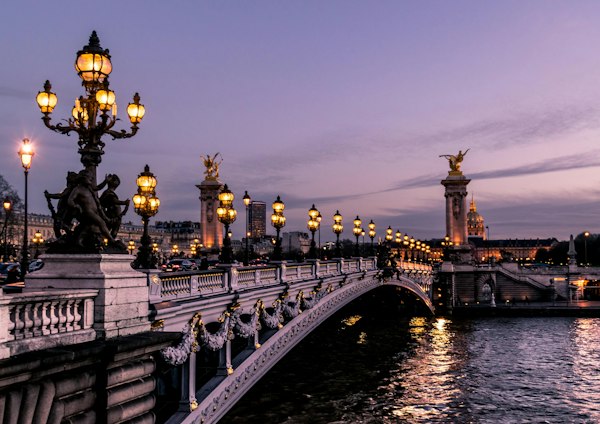
Pont Alexandre III

The most ornate bridge in Paris, with gilded statues, cherubs, and Art Nouveau lamps. Connects the Invalides esplanade to the Grand Palais. Spectacular at night when illuminated.

20 min

Musée Rodin

An 18th-century mansion housing Rodin's greatest works including The Thinker, The Kiss, and The Gates of Hell. The sculpture garden is among the most beautiful in Paris.

10 min

Pont de Bir-Hakeim

A striking two-level bridge that frames the Eiffel Tower through steel columns. The lower pedestrian walkway is one of the most cinematic viewpoints in Paris, made famous by several films.

The 7th Arrondissement
Rue Cler & Local Life

Beyond the monuments, the Eiffel Tower's neighborhood is one of the most charming in Paris. Here is how to experience it like a local.

Rue Cler Market Street

This pedestrianized street, a 10-minute walk from the tower, is the heart of the neighborhood. Open-air vendors sell fresh bread, cheese, charcuterie, wine, pastries, and flowers daily except Monday.

Must-try: Pick up a baguette from a boulangerie, cheese from a fromagerie, and fruit from a greengrocer for a Champ de Mars picnic. Budget about €10–€15 for a complete meal.

Local Cafés

Skip the tourist-trap cafés directly facing the tower. Instead, head to the side streets around Rue Cler and Avenue Bosquet. Café du Marche on Rue Cler is a local favorite with reasonable prices and authentic atmosphere.

Expect to pay: €3–€5 for an espresso, €8–€14 for a lunch plat du jour at a neighborhood bistro.

Artisan Shops

The 7th Arrondissement is home to independent chocolatiers, patisseries, and specialty food shops. Look for handmade chocolates, macarons, and foie gras. Many shops offer tastings and gift packaging for souvenirs.

Standout: Several family-run fromageries along Rue Cler have been operating for generations and can vacuum-pack cheese for travel.

Getting Around the 7th

The neighborhood is compact and best explored on foot. Metro stations Bir-Hakeim (Line 6), Trocadéro (Lines 6, 9), École Militaire (Line 8), and La Tour-Maubourg (Line 8) ring the area.

Walking distances: Rue Cler to Eiffel Tower: 10 min. Tower to Invalides: 15 min. Invalides to Musée Rodin: 5 min.

Professional Walking Tours
What Companies Offer

If you prefer expert commentary and local stories, here is what to expect from guided Eiffel Tower walking tours.

01

Small Group Tours

Groups of 8–15 people with a licensed guide. Typically 2–3 hours covering the tower area, Trocadéro, and Champ de Mars. Guides share engineering history, construction stories, and architectural context. Prices range from €25–€45 per person.

02

Private Walking Tours

Personalized itineraries with a dedicated guide. Routes are customized to your interests: history, photography, food, or architecture. Typically €150–€300 for 2–4 hours for groups up to 6 people. Best value for families or small groups.

03

Tower + Neighborhood Combos

Some tours combine skip-the-line tower access with a walking tour of the surrounding area. These typically run 3–4 hours and cost €50–€90 per person. They include tower entry, so you avoid the booking hassle.

04

What to Look For

Choose tours with licensed guides (look for the official French guide card), small group sizes (under 15), and clear cancellation policies. Read recent reviews specifically mentioning the guide by name. Avoid tours that are suspiciously cheap.

Combine the Tower
with Other Landmarks

Half-day and full-day itineraries that pair your Eiffel Tower visit with the best of Paris on foot.

Paris landmarks half-day walking itinerary
Recommended

Half-Day Itinerary (4–5 Hours)

Start at Trocadéro for morning photos (9:00). Cross to the tower, go up if you have tickets (9:30–11:00). Walk through Champ de Mars to Rue Cler for a market lunch (11:30). Continue to Les Invalides and Napoleon's tomb (13:00). End at Pont Alexandre III for photos.

Total Walking 4.5 km
Metro Start Trocadéro (Lines 6, 9)
Metro End Invalides (Lines 8, 13)
Pro tip: Book your tower tickets for 9:30 to catch the shortest queues, then have the rest of the day free for exploring on foot at your own pace.
Full-day Paris walking tour from the Eiffel Tower

Full-Day Itinerary (8–9 Hours)

Follow the half-day route through lunch, then continue to Musée Rodin (14:00). Walk along the Seine to Musée d'Orsay (15:30). Cross to the Tuileries Garden (17:30). Return to Trocadéro for sunset tower views (19:00). Dinner near Rue Cler.

Total Walking 8.5 km
Museums Included 3–4 possible
Seine river cruise combined with Eiffel Tower visit
Add-On

Seine River Cruise Combo

Add a 1-hour Seine cruise departing from Port de la Bourdonnais, directly at the foot of the tower. Cruises run every 30 minutes during peak season. Evening cruises with dinner are available. This adds a water-level perspective that walking cannot replicate.

Cruise Duration 60–70 min
Cost €16–€19

What Most Tourists
Never Find

The secret spots, quiet corners, and overlooked landmarks within 15 minutes of the Eiffel Tower.

01

Statue of Liberty Replica

On the southwestern tip of Île aux Cygnes sits a quarter-scale replica of the Statue of Liberty, facing west toward her larger sister in New York. Access via Pont de Bir-Hakeim. Virtually no crowds, even in peak season.

02

Square Rapp

A tiny residential square at 3 Square Rapp, just a 7-minute walk from the tower. The building at No. 29 Avenue Rapp features one of the most extravagant Art Nouveau facades in Paris, designed by Jules Lavirotte in 1901. It won the City of Paris facade competition that year.

03

Quai Branly Rooftop Garden

The rooftop terrace of the Musée du Quai Branly is open to museum visitors and offers an elevated, intimate view of the tower from just 300 meters away. Far quieter than Trocadéro and perfect for a contemplative moment.

04

The American Library in Paris

Founded in 1920 from books donated to American soldiers in World War I, this English-language library on Rue du Général Camou is a peaceful retreat. Visitors can browse for free and attend occasional literary events and talks.

Walking Smart
Comfort, Timing & Seasons

Footwear & Comfort

Paris sidewalks are uneven cobblestone in many areas. Wear broken-in walking shoes with good arch support. Avoid brand-new shoes and high heels. Bring blister plasters as a precaution.

Distances matter: The Classic Route covers 3.2 km, the Riverside Walk 4.1 km, and the Art Route 4.5 km. The full-day itinerary exceeds 8 km. Plan accordingly.

Water & Rest Stops

Free drinking fountains (Wallace fountains, the green cast-iron ones) are scattered throughout the 7th Arrondissement. Carry a refillable water bottle. Public benches are plentiful along Champ de Mars and the Seine quays.

Rest points: Champ de Mars benches, Trocadéro steps, Musée du Quai Branly garden, and Les Invalides esplanade all offer comfortable rest stops with views.

Spring & Summer (April–September)

Spring: Ideal walking weather with cherry blossoms in Champ de Mars (late March to mid-April). Temperatures 12–20°C. Light jacket needed for mornings. Longer daylight hours allow evening walks.

Summer: Warm (22–30°C), crowded, with very long days. Start early (before 9:00) to beat heat and crowds. The Seine quays offer shade. Sunset walks are magical but popular.

Autumn & Winter (October–March)

Autumn: Golden foliage transforms Champ de Mars. Fewer crowds, mild temperatures (8–16°C). Bring layers and a light rain jacket. October is arguably the best walking month in Paris.

Winter: Cold (2–8°C) but atmospheric. The tower's sparkle show (every hour on the hour after dark) is best appreciated during early winter sunsets. Christmas markets appear in December. Warm cafés provide refuge.

Safety & Navigation

The 7th Arrondissement is one of the safest neighborhoods in Paris. Standard precautions apply: keep valuables secure, especially around the tower where pickpockets target distracted tourists.

Navigation: Download offline maps before your trip. Google Maps and Citymapper both work well in Paris. Street signs in the 7th are generally well-maintained and easy to read.

Accessibility Notes

Most walking routes are wheelchair and stroller accessible. The Seine quays have ramps at regular intervals. Champ de Mars paths are paved and flat. Trocadéro has some steep sections but alternative ramp routes exist.

Rest rooms: Free public toilets are located at Champ de Mars (near the tower), Trocadéro, and in each museum. Cafés require a purchase to use facilities.

Common Questions
About Walking Tours

What is the best self-guided walking tour around the Eiffel Tower?

The Classic Route from Trocadéro to École Militaire is the most popular and covers all the essential viewpoints in about 2 hours and 3.2 km. It is suitable for all fitness levels and includes the most iconic photo spots. For culture lovers, the Art & Architecture route adds museum stops over 3 hours.

How long does it take to walk around the Eiffel Tower area?

A quick loop around the tower base takes 20–30 minutes. The Classic Route with photo stops takes about 2 hours. A comprehensive walk including the Seine riverside and nearby museums takes 3–4 hours. Add extra time for museum visits, café stops, and the inevitable extra photos.

Are guided tours worth the extra cost?

Guided tours (€25–€60 per person) add historical context, engineering stories, and insider knowledge that self-guided walks lack. They are especially worthwhile for first-time visitors and history enthusiasts. Self-guided tours are better for flexible schedules, budget travelers, and photographers who want to linger at each spot.

Can I do these walks with children?

Yes. The Classic Route is stroller-friendly and flat. Children enjoy the carousel at Champ de Mars, the fountains at Trocadéro, and the Statue of Liberty replica on Île aux Cygnes. Shorten routes as needed and build in playground stops. The Champ de Mars has a children's play area near the southeast corner.

What hidden gems should I not miss near the tower?

The Statue of Liberty replica on Île aux Cygnes, the Art Nouveau facade at 29 Avenue Rapp, the rooftop terrace of Musée du Quai Branly, and the American Library in Paris are all within a 15-minute walk and virtually unknown to most tourists.

What is the best time of year for walking tours?

October offers the ideal combination of mild weather, golden foliage, and manageable crowds. April and May are also excellent with spring blossoms. Summer provides the longest days but also the largest crowds and highest heat. Winter walking is atmospheric but cold, with the bonus of holiday decorations and the tower's sparkle show against early-dark skies.