
How to Get
to the Eiffel Tower

Every metro line, bus route, walking path, and transfer decoded. Arrive stress-free from anywhere in Paris or beyond.

Where Exactly
Is the Eiffel Tower?

Official Address

5 Avenue Anatole France, 75007 Paris, France

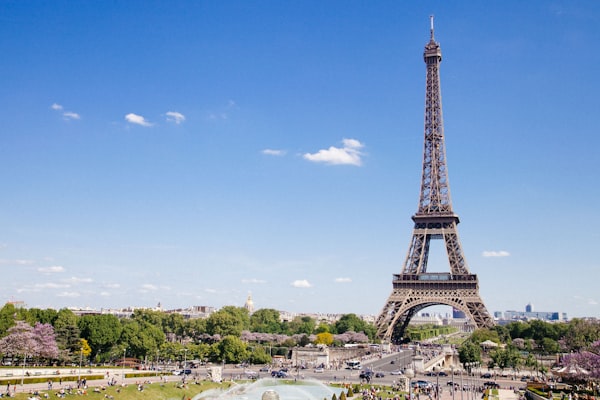
The tower stands on the Champ de Mars, a large public greenspace in the 7th arrondissement on the Left Bank of the Seine. It faces the Trocadéro gardens across the river to the northwest.

GPS & Coordinates

Latitude: 48.8584° N

Longitude: 2.2945° E

Search "Tour Eiffel" in Google Maps, Apple Maps, or Citymapper for real-time transit directions from your current location.

Neighborhood Context

The tower sits between the Champ de Mars park to the southeast and the Seine river to the northwest. The Trocadéro esplanade across Pont d'Iéna offers the famous front-on perspective. The residential 7th arrondissement surrounds it — upscale, quiet, and well-connected.

Four Entrance Pillars

The tower has four pillars at ground level: North (facing the Seine/Trocadéro), South (facing École Militaire), East (facing Quai Branly museum), and West (facing the riverside). Each pillar has its own ticket queue and entrance.

Three Stations.
Three Approaches.

The Paris Métro is the fastest, cheapest, and most reliable way to reach the Eiffel Tower. Three stations serve the area, each with a different approach and vibe.

Line 6

Bir-Hakeim

The closest metro station: just a 6-minute walk. Exit toward "Tour Eiffel" and walk along Quai Branly. You arrive at the East and South pillars. Best for: speed and efficiency. The elevated Line 6 train also crosses the Seine with a stunning tower view before you arrive.

Line 6 & 9

Trocadéro

The most scenic approach: 10-minute walk. Exit onto the Trocadéro esplanade for the iconic front-on view of the tower across the Seine. Walk down the Jardins du Trocadéro, cross Pont d'Iéna, and arrive at the North pillar. Best for: first-time visitors and photographers.

Line 8

École Militaire

A 10-minute walk through the Champ de Mars gardens. Exit the station and walk northwest along the park with the tower growing larger ahead of you. You arrive at the South pillar. Best for: a relaxed stroll through one of Paris's most beautiful parks, especially on sunny days.

Tip

Which to Choose?

In a hurry? Bir-Hakeim. First visit and want photos? Trocadéro. Relaxed afternoon? École Militaire. All three cost the same single t+ ticket (€2.15). Buy a carnet of 10 or use a Navigo Easy card to save. Trains run every 2–4 minutes during the day.

More Ways
to Arrive.

Paris riverside near the Eiffel Tower with transport connections
Direct Station

RER C — Champ de Mars – Tour Eiffel

The only train station named after the tower. RER Line C stops here, making it ideal for direct connections from Versailles (Versailles-Rive Gauche), Musée d'Orsay, Saint-Michel – Notre-Dame, and Austerlitz.

Walk to Tower 8 minutes
Best For Versailles day-trippers, Left Bank connections
Accessibility Step-free access available
When to use RER C: If you are coming from Versailles, Musée d'Orsay, or anywhere along the Left Bank Seine corridor. The RER C runs less frequently than the metro (every 5–10 minutes), so check schedules. Avoid during rush hour — trains get extremely crowded.
Paris bus near the Eiffel Tower area

Bus Routes

Four bus lines stop within a short walk of the tower. Buses offer a scenic surface-level ride through Paris, though they are slower than the metro.

Bus 82 Stop: Tour Eiffel (closest)
Bus 42 Stop: Tour Eiffel
Bus 87 Stop: Champ de Mars
Bus 69 Stop: Champ de Mars
Batobus river shuttle on the Seine near the Eiffel Tower
Scenic Route

Batobus (River Shuttle)

The Batobus is a hop-on, hop-off river shuttle that stops directly at the Eiffel Tower dock on the Seine. It connects major landmarks along the river including the Louvre, Musée d'Orsay, Notre-Dame, and Jardin des Plantes.

Stop Name Tour Eiffel
Day Pass €19 adult / €10 child
Best For Tourists, scenic arrival, sunny days

On Foot from
Popular Starting Points.

Paris is a walking city. Every route to the Eiffel Tower is flat, scenic, and full of reasons to stop along the way.

25 min / 2 km

From Arc de Triomphe

Walk south down Avenue Kléber to Place du Trocadéro. Take in the iconic esplanade view, descend through the Jardins du Trocadéro, and cross Pont d'Iéna. You arrive at the North pillar with the most famous approach in the world.

40 min / 3.5 km

From the Louvre

Head west along the Seine via Quai des Tuileries and Quai d'Orsay. You pass the Musée d'Orsay, the Assemblée Nationale, and Les Invalides along the way. A flat riverside walk with the tower growing larger with every step. Arrive at the East pillar.

50 min / 4 km

From Notre-Dame

Cross to the Left Bank and walk west along Quai de la Tournelle, passing Saint-Germain-des-Prés, the Musée d'Orsay, and the Esplanade des Invalides. A longer walk but through some of the most beautiful stretches of central Paris. Arrive at the South or East pillar.

15 min / 1.2 km

From Les Invalides

Walk southwest through the tree-lined avenues past the École Militaire and into the Champ de Mars. A quick, pleasant walk with the golden dome of Les Invalides behind you and the iron tower ahead. You arrive at the South pillar.

Getting There
from Further Away.

Aerial view of Paris with transport routes to the Eiffel Tower
From Airports

CDG & Orly Airport Transfers

Both Paris airports have reliable public transport connections to the Eiffel Tower area. Taxis have fixed-rate pricing to simplify budgeting.

From CDG (public) RER B → Line 6 | 60–75 min | ~€11.45
From CDG (taxi) Fixed rate €55–65 | 45–90 min
From Orly (public) Orlyval → RER B → Line 6 | 45–60 min | ~€12
From Orly (taxi) Fixed rate €35–44 | 30–60 min
CDG route detail: Take RER B toward Paris, change at Denfert-Rochereau to Metro Line 6 direction Charles de Gaulle – Étoile, and exit at Bir-Hakeim. Alternatively, take RER B to Chatelet-Les Halles, switch to RER C toward Versailles, and exit at Champ de Mars – Tour Eiffel.
Taxi and rideshare near the Eiffel Tower

By Taxi & Uber

Taxis and ride-hailing services are convenient but expect heavy traffic near the tower, especially during peak hours and summer months.

Drop-off point Quai Branly or Avenue Gustave Eiffel
Avoid drop-off at Pont d'Iéna (traffic gridlock)
Uber tip Set pin to "Quai Branly" for smooth pickup/drop
Paris streets near the Eiffel Tower with limited parking
Not Recommended

By Car (Driving & Parking)

Driving to the Eiffel Tower is strongly discouraged. Traffic around the tower is some of the worst in Paris, parking is extremely limited and expensive, and the area has aggressive traffic enforcement.

Nearest parking Pullman Paris Tour Eiffel garage
Cost €4–6/hour, €36+/day
Our advice Take the metro instead

Arriving by Rail?
Here Is Your Route.

Paris has six major train stations. Here is how to reach the Eiffel Tower from the three most common arrival points.

35–40 min

From Gare du Nord

Eurostar and Thalys arrivals. Take Metro Line 4 south to Strasbourg – Saint-Denis, switch to Line 6 at Montparnasse – Bienvenue toward Charles de Gaulle – Étoile, and exit at Bir-Hakeim. Alternatively, take RER B to Saint-Michel, switch to RER C, and exit at Champ de Mars – Tour Eiffel.

30–35 min

From Gare de Lyon

TGV arrivals from southern France and Switzerland. Take RER C (direction Versailles or Pontoise) directly to Champ de Mars – Tour Eiffel. This is one of the most convenient connections — no changes required. About 25 minutes on the train plus an 8-minute walk.

15–20 min

From Gare Montparnasse

The closest major station to the Eiffel Tower. Take Metro Line 6 from Montparnasse – Bienvenue toward Charles de Gaulle – Étoile and exit at Bir-Hakeim. Just 5 stops and 12 minutes on the train. The fastest connection from any Paris terminus.

Tip

Luggage Storage

Do not drag suitcases to the Eiffel Tower. All major stations have luggage storage lockers (consigne). Nannybag and LuggageHero also offer storage at shops near the tower. Drop your bags, explore light, and collect them later. Security checks at the tower are faster without large bags.

Step-Free Routes &
Which Pillar to Choose.

Wheelchair & Mobility Access

The best step-free route to the Eiffel Tower is via RER C to Champ de Mars – Tour Eiffel, which has elevator access at the station. From there, it is a flat 8-minute path to the tower along paved walkways.

At the tower, wheelchair users can access the 1st and 2nd floors by elevator. Go to the East pillar where a dedicated accessible queue is available. The summit has limited accessibility — contact the tower directly for current arrangements.

Metro Accessibility Warning

Most Paris metro stations, including Bir-Hakeim and École Militaire, have stairs only and no elevator access. Trocadéro has partial accessibility but involves steep outdoor slopes.

If you need step-free access, use the RER C or take a taxi/Uber to Quai Branly. Bus routes 82 and 42 also have lowered-floor accessible vehicles.

North & West Pillars

North Pillar: Faces the Seine and Trocadéro. This is where you arrive if walking from Trocadéro station. Elevator access to upper floors. Less crowded than the South pillar in the mornings.

West Pillar: Faces the riverside Quai Branly. Secondary elevator entrance. Often the shortest queues of all four pillars — a local secret worth knowing.

South & East Pillars

South Pillar: Faces École Militaire and Champ de Mars. The main elevator entrance for summit access. Typically has the longest queues, especially in summer. Arrive early or choose another pillar.

East Pillar: The stairs entrance is here. Also the primary entrance for accessibility and group bookings. If you have stairs tickets, this is your pillar. The Jules Verne restaurant entrance is also at the South pillar.

Common Questions
About Getting There.

What is the nearest metro station to the Eiffel Tower?

Bir-Hakeim on Metro Line 6 is the closest at just a 6-minute walk. Trocadéro (Lines 6 and 9) and École Militaire (Line 8) are both about 10 minutes away on foot. Choose Trocadéro for the best photo approach, Bir-Hakeim for speed, or École Militaire for a park stroll.

How do I get to the Eiffel Tower from CDG Airport?

Take the RER B from CDG to Denfert-Rochereau, then switch to Metro Line 6 to Bir-Hakeim. Total journey: 60–75 minutes, approximately €11.45. Alternatively, a taxi costs a fixed rate of €55–65 to the Left Bank and takes 45–90 minutes depending on traffic.

Can I walk to the Eiffel Tower from central Paris?

Absolutely. From the Arc de Triomphe it is a 25-minute walk (2 km) via Trocadéro. From the Louvre, expect 40 minutes (3.5 km) along the Seine. From Notre-Dame, about 50 minutes (4 km). All routes are flat, safe, and scenic.

Is there wheelchair-accessible transport to the tower?

Yes. The RER C to Champ de Mars – Tour Eiffel has step-free access. From the station, it is a flat 8-minute path to the tower. Most metro stations in the area lack elevators, so RER C, taxis, or accessible bus routes (82, 42) are your best options. At the tower, use the East pillar for the accessible queue.

Which entrance pillar should I use?

For the shortest queues, try the West pillar. For summit elevator access, the South pillar is the main entrance (but has the longest lines). For stairs, go to the East pillar. The North pillar is a good middle ground with moderate queues and a scenic Seine-side approach.

Should I take a taxi or the metro?

The metro is almost always faster and far cheaper. Traffic around the Eiffel Tower is notoriously slow, especially between 11:00 and 19:00 in summer. A taxi from central Paris can take 30–45 minutes in traffic versus 15–20 minutes on the metro. Take a taxi only if you have mobility needs, heavy luggage, or are traveling late at night.